

DOCTOR LED CONSULTATION
TREATMENT FOR PATCHY ALOPECIA AREATA
INJECTABLE TREATMENT OPTION
SUITABILITY ASSESSED AT CONSULTATION
LOCAL ANAESTHETIC MAY BE USED
What is alopecia areata?
Alopecia areata is a condition that causes patchy hair loss on the scalp, face and sometimes other areas of the body. It is an autoimmune condition, meaning the body’s immune system mistakenly affects healthy hair follicles. A hair follicle is the sheath of cells and connective tissue that surrounds the root of a hair.
If you are experiencing alopecia areata and are unsure what treatment options may be available, Hair Doctors provides assessment and treatment options for patients with alopecia areata in Sydney. Our doctors can assess your condition and discuss suitable options with you, including an injectable treatment option where appropriate.
Whether a particular treatment is suitable for you, along with its potential benefits, risks and limitations, is determined following a consultation and clinical assessment.
Wondering if alopecia areata treatment is right for you?
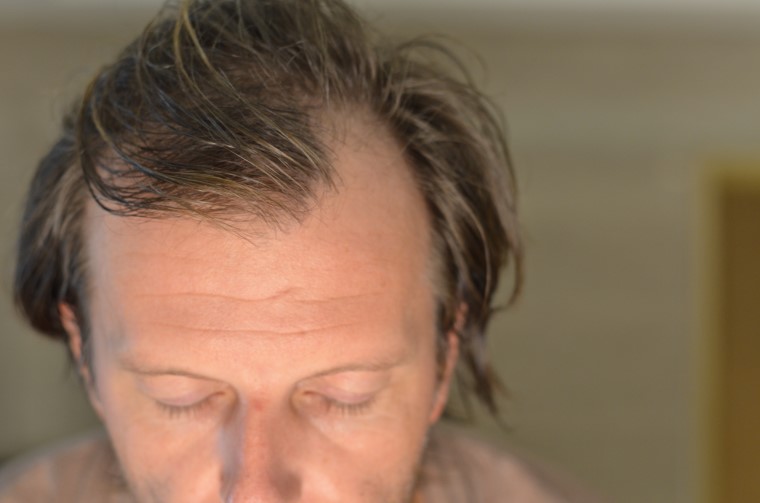
Alopecia areata treatment in Sydney
We offer an injectable treatment option that may be considered in the management of patchy alopecia areata. Injections are given into the scalp and may be repeated over a period of weeks, depending on the individual. Local anaesthetic may be used.
Whether this treatment is suitable for you, along with its potential benefits, risks and limitations, is assessed at a consultation and clinical assessment with our doctor. Where there is any doubt about the diagnosis, further assessment such as a scalp biopsy or blood tests may be recommended before treatment.
Please read our risks page before deciding whether a procedure is right for you.

Alopecia areata is an autoimmune condition that can cause patchy hair loss, and a range of treatment options may be considered depending on an individual’s circumstances and clinical assessment.
What causes
alopecia areata?
The exact cause of alopecia areata is unknown, but it is thought to be an autoimmune disorder. Genetics may play a role, as the condition is believed to be more likely to occur in families with a history of autoimmune diseases.
Symptoms of alopecia areata
The main symptom of alopecia areata is patchy hair loss, usually starting with one or more small, round bald patches on the scalp or other parts of the body.
Other symptoms can include:
- Thinning of the scalp hair
- Complete baldness (alopecia totalis)
- Loss of all body hair (alopecia universalis)
- Itching or tingling in the scalp
- Sudden shedding of clumps of hair
- Burning or tenderness in the scalp
- Patches of broken hairs that look like exclamation points
- Nail changes, such as white spots, pits in the nail, or brittle nails.
How it works
An injectable treatment may be considered as an option for some individuals with alopecia areata. Suitability depends on your individual circumstances and is determined following a consultation and clinical assessment with our doctor.
The treatment involves administering medication into targeted areas of the scalp or skin. The number of treatments recommended, the interval between them and the overall treatment plan vary depending on your condition and response to treatment.
Treatment is typically performed in a clinical setting. During your consultation, your doctor will discuss the procedure, including the potential risks, benefits and limitations, as well as any relevant recovery considerations. Treatment duration and recovery experiences vary between individuals, and your doctor will provide information about what to expect during and after the procedure, along with any recommended follow-up care.
Please read our risks page before deciding whether a procedure is right for you.
Alopecia areata injection costs
The suitability of this treatment, and any associated costs, can only be determined following a consultation and clinical assessment with our doctor. During your consultation, your doctor will assess your condition, discuss the available treatment options and provide information about costs. Treatment recommendations, including any follow-up appointments, are based on your individual circumstances and clinical assessment.
To arrange a consultation, please contact our clinic.
Why choose HAIR DOCTORS
Hair Doctors in Sydney is a doctor-led hair restoration clinic offering treatment options for men and women experiencing hair loss. Our service includes hair loss consultations and a hair and scalp analysis, with treatment planned individually following clinical assessment. Where treatment involving prescription medication may be appropriate, this is assessed and discussed with you at a consultation with our doctor.
Meet our doctors

DR.
ATEKA KHAN (MED0002228811)
General practitioner with experience in hair restoration
Dr Ateka has over a decade of experience in aesthetic medicine and minor surgery. She qualified from the University of Dundee in the UK in 2006 and undertook training in anaesthesia and acute care. She holds a qualification from the London Hair Restoration Academy and performs hair transplant procedures using FUE extraction and Implanter Pen implantation techniques.
DR.
OSSMAN ASHRAF (MED0002227434)
General practitioner with experience in hair restoration
Dr Oz has experience in men’s health and aesthetic medicine. He qualified from the University of Dundee in the UK in 2009 and holds a qualification from the London Hair Restoration Academy. He performs hair transplant procedures using FUE extraction and Implanter Pen implantation techniques, and holds further qualifications in medical education. He is the Medical Advisor and Educator for the Australian men’s health platform MOSH.

Our Locations
FAQs
If you require more information on alopecia treatments, please read our most frequently asked questions:
Alopecia areata may be assessed and managed by a doctor. At Hair Doctors, our doctors assess alopecia areata and discuss suitable treatment options with you, including an injectable treatment option where appropriate. Suitability is determined following consultation and clinical assessment.
No. Alopecia areata is an autoimmune condition that causes sudden patchy hair loss. Pattern hair loss is a genetic condition that causes gradual thinning, typically at the temples and crown.
No. Androgenetic alopecia is hair loss related to an inherited sensitivity to the hormone DHT. Telogen effluvium is hair loss that occurs when the normal hair growth cycle is disrupted. Alopecia areata is an autoimmune condition that causes patchy hair loss. These are different conditions with different causes.
This information is general and is not a substitute for individual medical advice. Anyone experiencing hair loss or a medical condition should consult a doctor. Suitability for any treatment is determined following consultation.
How to schedule a consultation
To schedule a consultation with one of our hair loss experts, please contact us as follows:
- Call us on 02 7252 3351
- Email us at info@hairdoctors.com.au
- Book online