Last updated on October 20, 2026
When people chat about hair restoration, the conversation almost always turns to men tackling receding crowns and bald spots. Yet millions of women quietly deal with thinning locks, an eroding hairline, or patchy loss brought on by stress, medical shifts, and genetics. It leaves many asking the same question: can women get hair transplants?
The short answer is yes. Women do choose hair transplantation at clinics using modern techniques that allow doctors and nurses to work discreetly around existing hair.
From building volume along a thin parting to lowering a naturally high hairline or restoring sparse eyebrows, learning how these procedures work helps you make an informed choice. Here is a clear overview of what to expect, taking you from your first assessment right through to your recovery phase.
What is Female Pattern Hair Loss?
Before looking at how hair transplants work, it helps to understand what female pattern hair loss actually looks like in day-to-day life. Unlike men, who usually see a receding hairline or a clear bald patch at the crown, women tend to notice a different pattern altogether.
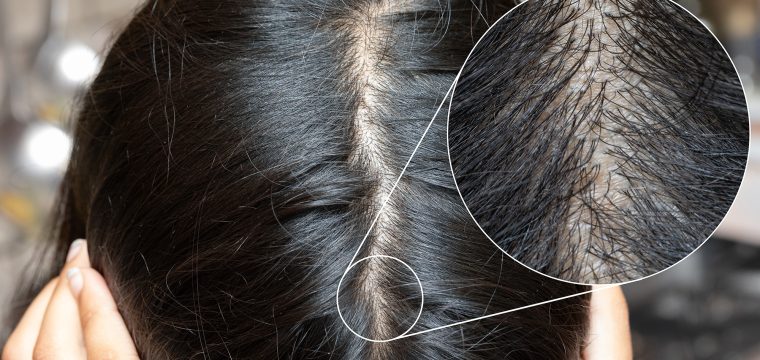
Known medically as female pattern hair loss or androgenetic alopecia, it usually shows up as general thinning across the top of your head. You might first notice your usual parting widening, even though the hair right at the front stays thicker. Things like pregnancy, menopause, thyroid changes, PCOS, intense physical stress, and simple genetics can all affect hair density.
Can All Female Hair Loss be Treated with a Hair Transplant?
A hair transplant isn’t always the recommended option for every woman facing hair loss. Because female hair thinning often spreads across the entire scalp, locating a strong, reliable donor site becomes the crucial first step.
Clinicians harvest permanent hair follicles from the back and sides of your head to place them where coverage is sparse. If thinning has affected your entire scalp equally, that donor area might not have enough dense hair to transplant safely.
Generally, this works best for women who have:
- Concentrated female pattern thinning alongside thick, robust hair at the back of the head.
- A naturally high forehead or hairline they would like to bring lower.
- Hair loss caused by injury, prior surgical scars, or tight styling methods pulling on the roots (traction alopecia).
Clinics like Hair Doctors carry out detailed scalp assessments before recommending a hair transplant. Diagnostic tools like the HairMetrix system evaluate follicle density and strand thickness, checking if your donor site can support a procedure. Sometimes, medical hair regrowth treatments are a more appropriate option too.
Scalp Hair Transplants and Hairline Correction
Scalp transplants tackle two main aesthetic concerns for women: improving overall hair thickness and reshaping the hairline.
Restoring Scalp Density
When female pattern hair loss widens your parting, a clinician can insert fresh hair grafts right between your existing strands. This requires a steady hand and keen spatial awareness. The practitioner must angle, direct, and depth-match every single graft to fit your natural growth, building visual volume while limiting disturbance to nearby healthy roots.
Lowering and Reshaping the Hairline
Some women naturally carry a higher forehead, whilst others watch their temples slowly retreat over time. A female hairline correction can reshape the upper border of the face.
Designing a female hairline requires a very different approach than designing a male hairline. Male hairlines tend to feature sharper, angled corners. Female hairlines feature rounded, gentle contours with fine, delicate hairs scattered along the front edge. Your doctor will design this shape alongside you.
Eyebrow Transplants for Women
Surgical hair restoration isn’t just limited to the scalp. Eyebrow transplants have become an option for women who spent years over-plucking or who lost brow density due to illness, scarring, or trauma.
Eyebrows frame your eyes and bring expression to your face. Drawing them on every morning takes time, and microblading eventually fades away. An eyebrow transplant is a longer-lasting option that uses your own real hair.
During an eyebrow procedure:
- The doctor or nurse extracts individual single-hair follicles from your donor site, picking finer strands that match natural eyebrow texture.
- They create micro-incisions along the brow line, closely following the direction of your natural brow growth.
- The team carefully implants the grafts one by one.
Because scalp hair grows faster than natural eyebrow hair, they will require regular trimming to maintain the desired appearance.
Which Techniques Work Best for Female Hair Transplants?
Modern hair restoration relies on minimally invasive techniques that minimise the need for large scalp incisions or prominent linear scars.
Follicular Unit Extraction (FUE)
Follicular Unit Extraction (FUE) is a less invasive method of hair restoration. Older techniques (such as FUT or “strip” surgery) involved removing a strip of skin from the back of the head, leaving a long horizontal scar behind. FUE avoids that entirely.
During FUE, your doctor uses a micro-punch tool to harvest individual hair follicles straight from the donor area. Each graft contains between 1-4 hairs. Because these extraction points measure under a millimetre across, they heal into tiny dot-like scars that are usually hidden beneath your surrounding hair.
Implanter Pen Technology
To build density while limiting disturbance to existing strands, clinics use specialised implanter pens. An implanter pen lets the clinician load a harvested graft into a fine, hollow needle and place it straight into the scalp in one fluid motion.
This method holds key practical benefits:
- Pinpoint Control: The practitioner directly guides the exact angle, depth, and placement of every hair.
- Graft Handling: The implanter pen is designed for precise placement and aims to handle grafts carefully to support their viability.
- Working Between Strands: The slim needle slides between natural hairs helping to reduce accidental damage to nearby roots.
Do Women Need to Shave Their Heads for a Hair Transplant?
This single worry stops many women from pursuing hair restoration. The thought of shaving your whole head obviously feels daunting! But women don’t usually need to shave their entire head for a hair transplant.
Clinics use low-shave FUE techniques to help solve this concern.
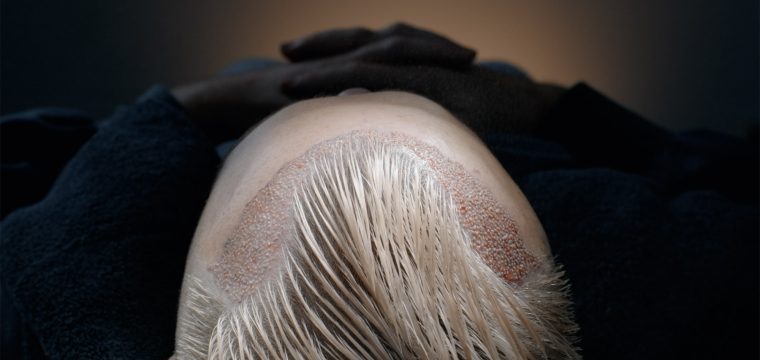
The Hidden Window Technique
Instead of shaving your head, the surgical team trims a small, narrow rectangular patch hidden away at the back of your scalp. They harvest the donor grafts purely from this concealed spot.
Because you keep the rest of your hair at its usual length, your longer strands drape over the trimmed section as soon as the session ends. This technique helps to ensure the donor area is typically well-concealed by the surrounding hair while it heals. The recipient zone (where the new grafts go) can sometimes stay unshaven as well, as the surgical team works carefully around your long locks.
Female Hair Transplant Recovery and What to Expect
So what happens after the procedure? Female hair transplant recovery is the same as for a male hair transplant, and knowing what to expect helps you plan for your procedure.
The first thing to know is that hair transplantation takes place as a day procedure under local anaesthetic, meaning you head home shortly after the team finishes up.
The Initial Healing Phase (Days 1 to 10)
Most patients experience some swelling, discomfort, and redness around the transplant and donor area for the first week, which can be managed by over-the-counter medication and sleeping with your head elevated. Over this time, pain and swelling will reduce as tiny scabs will form around each fresh graft. Redness can take 6-12 weeks to settle.
Most women return to work and day-to-day social activities within 3-7 days, especially if longer existing hair easily covers the treated areas.
The Shedding Phase (Weeks 2 to 6)
Around 2-6 weeks, you might see the newly transplanted hair shafts fall out. Try not to worry, as this is normal! It’s known as shock shedding, which happens naturally. The transplanted root (the living part of the follicle) stays resting safely under your skin, and as it heals, it makes way for fresh growth.
New Growth (Months 3 to 12)
Fresh hair begins poking through the scalp around months 3-4. At first, these young strands feel light and fine. As the months roll on, they grow thicker, longer, and stronger.
Many patients see clear visual changes by month 6, with final density and texture settling in around months 12-18. Once fully grown, the goal is for the transplanted hair to be treated like the rest of your hair. Your practitioner will provide specific advice on long-term care, including colouring and styling.
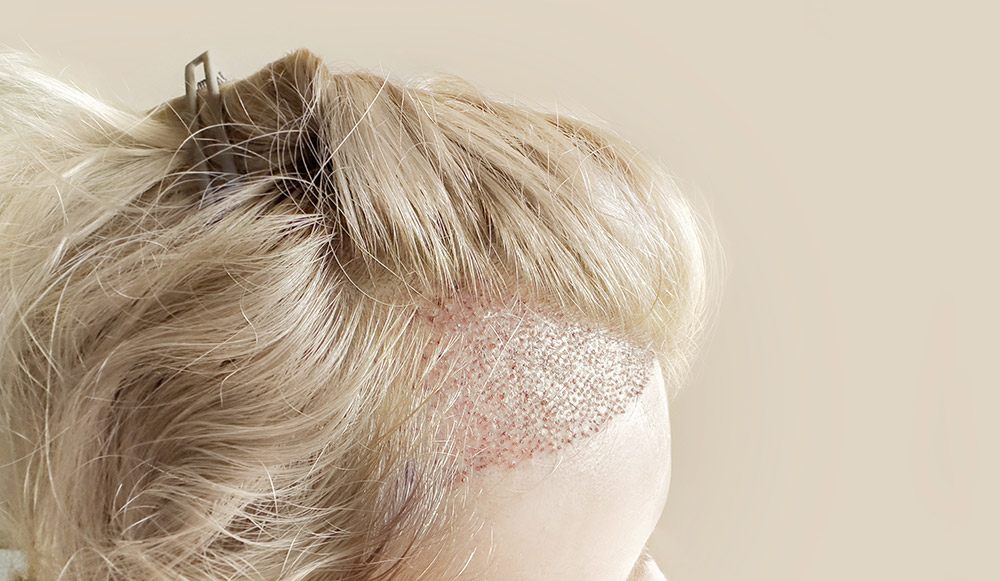
From building volume along a thin parting to lowering a naturally high hairline or restoring sparse eyebrows, hair transplants for women are a treatment option for certain types of genetic or permanent hair loss.
Hair Restoration for Women in Sydney and Melbourne
Hair restoration for women offers a way to address concerns about thinning locks or a high hairline. Through FUE extraction, fine implanter technology, and hidden donor windows, clinics can often restore a level of natural volume without having to shave your head.
All surgery carries risks. Results vary between individuals.
If hair loss affects you, speaking with a medical professional is a great first step. A thorough scalp evaluation will help guide your options and determine the appropriate options for your circumstances.
FAQs
Does a hair transplant look natural on women?
Medical practitioners aim to place the transplanted hair to match your natural growth patterns, designing female hairlines with soft contours and fine frontal hairs. As with any procedure, individual aesthetic results vary based on hair characteristics and scalp conditions.
Do women need to shave their heads for a hair transplant?
In most cases, a full head shave is not required for a female hair transplant. Hair transplant clinics in Sydney and Melbourne often use a discreet donor window technique, shaving only a small, narrow section at the back of the scalp. Surrounding long hair covers this area, keeping the donor site concealed while it heals.
Can women get hair transplants for their eyebrows?
Yes, eyebrow transplantation is a recognised clinical option at clinics in Sydney and Melbourne. The procedure involves harvesting fine single-hair follicles from the scalp and implanting them along the brow line to match your natural growth direction. Because scalp hair grows faster than eyebrow hair, periodic trimming is required.
What results can you get from a female hair transplant?
A transplant aims to improve visual hair density by transferring viable follicles into sparser areas. The achievable density depends on your available donor supply, scalp elasticity, and hair characteristics. Diagnostic tools are used during your consultation to evaluate these factors.
About The Author
Dr. Ossman Ashraf
In 2009, Dr Oz graduated from the University of Dundee, UK with a qualification in Men’s Health and Aesthetic Medicine. He then furthered his qualifications in medical education and is currently the Medical Advisor/Educator for MOSH, Australia’s leading online Men’s Health platform. He is accredited by the London Hair Restoration Academy and specialises in using the most up-to-date micro FUE extraction and DHI implantation techniques for transplant surgery.