Last updated on November 5, 2026
Most people notice it in the same unglamorous way. A dark jumper, a bathroom mirror, and a scattering of white specks across the shoulders. The next move is usually a trip to the supermarket aisle, where a dozen bottles promise relief, and the shopper picks one based on packaging rather than diagnosis. That guess matters more than it seems.
The dandruff vs dry scalp question isn’t cosmetic hair-splitting. The two conditions have different underlying causes, and the strongest anti-dandruff shampoo on the shelf can make a genuinely dry scalp feel worse. For anyone already watching their hairline and wondering whether flaking is part of the problem, getting the identification right is the practical first step.
The Short Answer
Is dandruff and dry scalp the same? No. They can look alike from across a room, but they start from opposite ends of the moisture spectrum. Dry scalp happens when the skin loses water and barrier function, much like dry skin anywhere else on the body.
Dandruff, in most cases, is a mild form of seborrheic dermatitis, an inflammatory response linked to Malassezia yeast that lives on almost everyone’s skin and feeds on scalp oils.
So the difference between dandruff and dry scalp comes down to this: one is a hydration problem, the other is an inflammation and microbiome problem that tends to occur on oilier skin.
How Dry Scalp Behaves
Dry scalp flakes are small, fine, powdery and pale. They lift off easily and often end up on clothing without much help. The scalp itself may feel tight, especially after washing, and the itch is usually a light, surface-level irritation rather than a deep, persistent one.
The giveaway is what’s happening elsewhere. People with a genuinely dry scalp commonly have dry shins, dry hands, or flaky patches around the nose and eyebrows in winter. The scalp isn’t behaving oddly. The whole skin barrier is under strain.
Common triggers include:
- Cold, dry air and heated indoor environments. Winter weather and indoor heating are a reliable culprit, and air conditioning in summer does something similar.
- Long, hot showers. Heat strips sebum efficiently.
- Harsh surfactants. Some sulphate-heavy clarifying shampoos are designed to strip oil, which is fine occasionally and punishing daily.
- Contact irritation. Fragrances, preservatives, and certain styling products can cause contact dermatitis that mimics simple dryness.
- Age. Sebum production declines over time, so scalps that were never dry at 25 can become dry at 55.
How Dandruff Behaves
Dandruff flakes tend to be larger, greasier, and white to yellowish. They cling. Rather than falling freely, they sit in clumps at the roots and along the hairline, and they often reappear within a day or two of washing. The itch is usually more insistent, and the scalp may look pink or slightly red underneath the flaking.
Understanding the mechanism matters because it explains why treatment differs. Malassezia breaks down sebum and releases fatty acid by-products. In susceptible people, those by-products trigger inflammation, and inflamed skin accelerates cell turnover. Skin cells that should shed invisibly instead clump together and become visible.
Two implications follow. First, dandruff isn’t a hygiene failure, though infrequent washing can allow oil and dead cells to accumulate and make things worse. Second, because the yeast doesn’t disappear permanently, dandruff is typically managed rather than cured. Flares come and go, often worsening with stress, illness, seasonal change, and for some people, cold weather.
How to Check if You Have Dandruff or Dry Scalp
No article can diagnose a scalp, but a few observations narrow things down quickly:
Flake size and colour. Dry scalp produces small, fine, white flakes that scatter easily across clothing. Dandruff flakes are noticeably larger and range from white to yellowish. Holding a section of hair up to good natural light makes the size difference easier to judge than a mirror does.
Flake texture. Dry flakes feel powdery between the fingers and break apart with light pressure. Dandruff flakes feel oily and slightly tacky, and they tend to clump together rather than separate. That stickiness is why they cling to the roots instead of falling free.
Scalp feel. A dry scalp often feels tight or taut, particularly in the hour after washing. A dandruff-prone scalp usually feels oily by comparison, and the skin beneath the flaking may look pink or faintly red when the hair is parted and examined closely.
Hair condition. Hair sitting on a dry scalp commonly looks dull and feels rough, with limited natural shine. With dandruff, the roots and hairline often turn greasy within a day or two of washing, while the mid-lengths and ends can still feel perfectly normal.
Skin elsewhere. This is one of the most reliable clues. Dry scalp rarely travels alone, so dry shins, dry hands or flaking around the nose and eyebrows point towards a whole-body barrier issue. With dandruff, skin elsewhere usually looks normal or slightly oily.
Response to moisturising. The most useful test of all. Switching to a gentle, hydrating shampoo should bring clear improvement within a fortnight if dryness is the cause. If the flaking stays the same or worsens, dandruff becomes the more likely explanation and needs a different approach.
There’s a complication worth naming. The two can coexist. An oily, dandruff-prone scalp that’s been treated aggressively with medicated shampoo three times a week can become dry and irritated on top of the original problem. That’s one of the most common self-treatment mistakes, and it produces a confusing mix of symptoms.
What to Do
Firstly, neither dry scalp nor ordinary dandruff causes permanent pattern hair loss, but some scalp conditions can. Generally, androgenetic alopecia is the cause of male and female pattern baldness, which is driven by genetics and hormones. Chronic scratching, though, causes mechanical trauma that breaks hairs and irritates follicles, and prolonged seborrheic dermatitis can create inflammation that keeps follicles from cycling and growing properly. So, what can you do if you have dandruff or dry scalp?
For dry scalp. Reduce stripping, add moisture. That means a gentler, low-surfactant shampoo, cooler water, and less frequent washing where the hair type allows it. A pre-wash oil treatment left on for 20-30 minutes can help, though heavy oils suit some hair types far better than others. Cutting fragranced styling products for a few weeks is a reasonable elimination test if contact irritation is suspected.
For dandruff. Target the yeast and the inflammation. Over-the-counter options in Australian pharmacies commonly contain ketoconazole, zinc pyrithione, selenium sulphide, coal tar, or salicylic acid. Two points that get missed:
- Contact time matters. These are medicated products, not ordinary shampoos. Most need three to five minutes on the scalp before rinsing.
- Rotation helps. Some people find a single active loses effectiveness over months. Alternating between two different actives is a widely used approach, though evidence on rotation is limited.
Prescription and medical options exist for stubborn cases, including hair and scalp health treatments. Those decisions belong with a doctor, not a shelf.
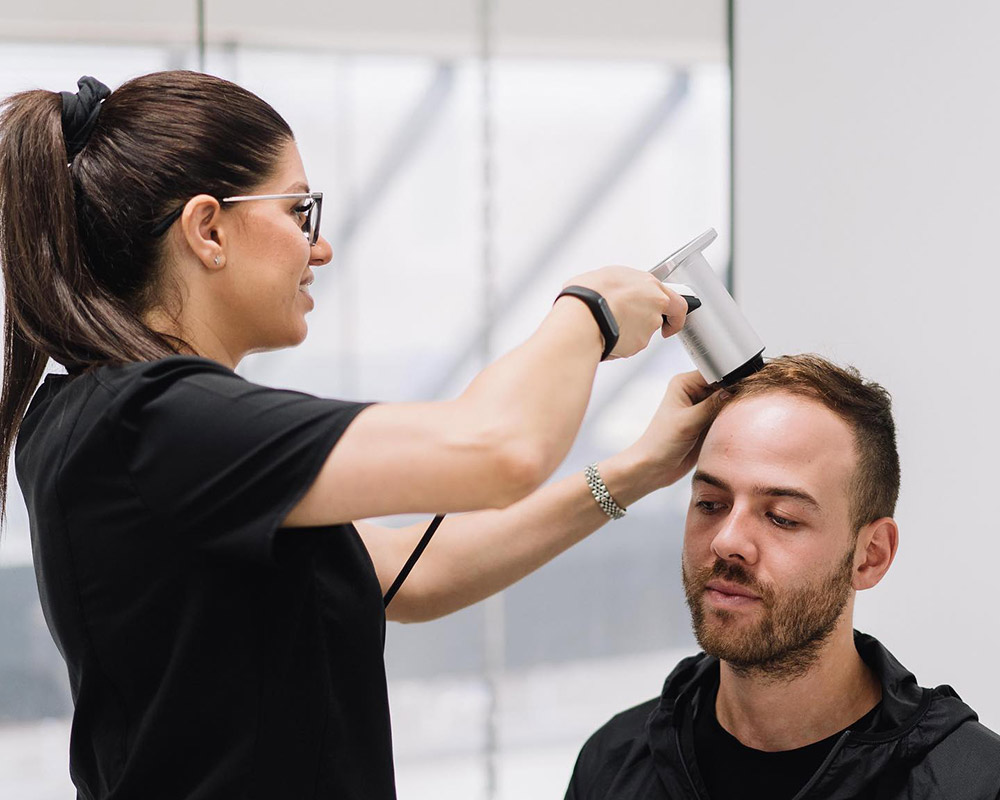
Hair Doctors offers scalp assessments, hair growth treatments, and hair transplants across Sydney and Melbourne for men and women.
When to Get Dandruff, Your Scalp, or Hair Loss Assessed by a Hair Doctor
A reasonable threshold: 4-6 weeks of consistent, correctly used over-the-counter treatment without meaningful improvement. Even sooner if there’s bleeding, weeping, crusting, painful areas, spreading beyond the scalp, or visible thinning and widening of the part.
For people weighing up different types of hair loss treatment, there’s a practical sequencing argument here too. An inflamed or heavily flaking scalp complicates both assessment and treatment. Settling the scalp first usually makes everything that follows more straightforward.
Hair Doctors provides scalp assessments across Sydney and Melbourne, to help identify the underlying cause of flaking and building a treatment plan suited to each person’s scalp condition and hair growth goals. Book a consultation with the team to have your scalp assessed and discuss your options.
FAQs
Does hard water in Sydney or Melbourne affect scalp flaking?
Water hardness varies by supply area and can leave mineral residue that some people find drying or irritating, though evidence linking it directly to dandruff is weak. If flaking worsened after moving house, trying a chelating shampoo fortnightly may help you see whether mineral build-up is contributing.
Will treating dandruff help hair grow back?
Treating dandruff can reduce itching, scratching and inflammation, which helps protect existing hairs from breakage and trauma. It will not reverse genetic pattern thinning, which has a separate cause and requires separate management, so some people may need to address both concerns.
Are natural remedies like tea tree or apple cider vinegar worth trying?
Tea tree oil has some antifungal activity and limited supporting research at around 5 per cent concentration. Apple cider vinegar has little quality evidence and can irritate broken skin, and neither is as well supported as active treatments for moderate to severe dandruff. If natural options have not helped after several weeks, a clinical review may be more useful than continuing to experiment.
Should scalp problems be sorted before starting hair loss treatment?
Generally, yes. Irritated or inflamed skin can make hair loss treatments harder to tolerate and can make it more difficult to track progress accurately. Starting with a settled scalp can also provide clearer baseline photographs and make ongoing treatment easier to follow.

About The Author
Dr. Ossman Ashraf
In 2009, Dr Oz graduated from the University of Dundee, UK with a qualification in Men’s Health and Aesthetic Medicine. He then furthered his qualifications in medical education and is currently the Medical Advisor/Educator for MOSH, Australia’s leading online Men’s Health platform. He is accredited by the London Hair Restoration Academy and specialises in using the most up-to-date micro FUE extraction and DHI implantation techniques for transplant surgery.